A world of solidarity is possible

Project appouved in 2025

The Association presents the 2025 supported initiative !

Learn more...

Our aims :

Promote the wellbeing and empowerment of underprivileged human communities by valuing and supporting their own capacities to understand and to act, their biological and cultural diversity, and their sense of solidarity—internal as well as with other communities.

Learn more...

Community

There exist a plethora of human “communities” in the ordinary sense; they share a territory, a city quarter, natural resources, a language, a culture, traditions, etc. These socio-cultural communities are crucial for the work of the Foundation. There also exist human communities which are centered around one or several common issues or interests but whose members may not be linked geographically or culturally.

Learn more...

Solidarity

Solidarity is first of all an attitude and a value. It means the acceptance of the other’s humanity, and turns the other into an equal subject, independently of possible social, economic, political or other differences. But solidarity is also an active engagement – between individuals, within a community, or between different communities – for instance to defend or to reinforce a common good or a common interest.

Learn more...

Meeting the Stranger, this fundamental event

Emmanuel Levinas calls « event » the encounter with the other, he even calls it « fundamental event ». It is, according to him, the most important experience, which opens the greatest horizons.

Learn more...
Google+

The Association

The Association Paul K. Feyerabend (APKF) promotes the empowerment and wellbeing of disadvantaged human communities. By strengthening intra and inter-community solidarity, the Association strives to improve local capacities, promote the respect of human rights, and sustain cultural and biological diversity.

The Association, officially declared of public utility in Switzerland, was created in 2025.  It is based on the experience of the Paul K. Feyerabend Foundation that, since 2006, engaged nominators and beneficiaries in over 70 countries, supporting 80 initiatives and honouring 38 laureates with the Paul K. Feyerabend Award.  The reason why the Foundation had to transform itself into an Association are briefly outlined here


Recent articles :

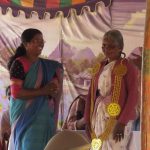
S. Janaki - a wise woman bridging tradition and modernity in the Nilgiris (India)

S. Janaki – a wise woman bridging tradition and modernity in the Nilgiris (India)

Janaki is a Kurumba woman elder who has emerged as a leader amongst her community, working hard to promote traditional systems of governance and revive important events in the community to keep their pride and identity alive. Protection of sacred … Read more

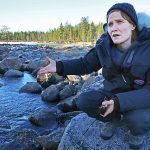
Pauliina Feodoroff, courageous beacon of hope (Finland)

Pauliina Feodoroff, courageous beacon of hope (Finland)

Mrs. Pauliina Feodoroff is a Sámi woman from the Skolt family– a minority of a minority, who had to relocate to Finland in 1944 at the end of the Second World War due to territorial annexations by Soviet Union. The … Read more

José Leónidas Ramos and Danilo Gómez, champions of ecological community development (Honduras)

José Leónidas Ramos and Danilo Gómez, champions of ecological community development (Honduras)

The Gulf of Fonseca, in Central America is shared by Honduras, Nicaragua and El Salvador. Mangrove ecosystems and other types of wetlands dominate the coast, where mammals, reptiles, mollusks, crustaceans, and birds interact, and where thousands of fishermen use the … Read more

Dingo Markus, leading by example in Indonesia

Dingo Markus, leading by example in Indonesia

“One day, as I was walking from the village to the forest, I stopped by the river and thought that the forest, the trees, the water… they are not just for us to exploit and deplete, they are the source Read more

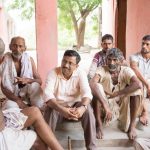
Aman Singh, the Orans advocate in Rajastan, India

Aman Singh, the Orans advocate in Rajastan, India

In Rajastan (India), “Orans” are local community conserved areas that act as a store of biodiversity, enable effective water management and serve as a community-based system to restore and regenerate natural considtions. There are about 25,000 Orans in Rajasthan, which … Read more

<< previous page next page >>